

It’s no secret, and certainly no surprise, that stress levels are practically tap-dancing on the ceiling these days.
There’s a collective hum of anxiety floating about; it lives in traffic jams, glows behind our screens, and seeps into supermarket queues.
Burnout, once the domain of high-flyers and overachievers, now comes as standard issue with most modern lives.
Whether you’re working in an office, a warehouse, or your own kitchen, the tightrope walk of responsibility never really lets up.
That “Sunday night dread” feeling? It’s turned into a Tuesday morning twitch and a Friday night fizzled-out flatline.
Most people (and this includes those who post about “thriving” on social media) are stretched thin like the last bit of margarine being scraped over burnt toast.
Unwinding, then, has become less of a luxury and more of a necessity.
It’s no longer just about having a bubble bath and pretending that lavender oil will erase the pervasively intense existential dread.
We’ve reached a point where loosening the psychological knots isn’t just a nice idea – it’s vital.
Screens: Our Portholes to Peace

As life spins faster, the common denominator in how we all try to decompress is sitting right in our hands – glowing softly (and often judgingly) – our screens.
Phones, tablets, laptops, televisions – they’ve become our therapists, our distraction artists, our babysitters for the adult brain.
It’s no coincidence that scrolling has become the new smoking break. The act of pulling out your phone and staring at AI-curated nonsense is oddly pacifying.
It’s like our brains sigh and say, “Ah yes, the comfort of other people’s breakfast photos and videos of their labrador as they go about their daily antics.
Even before the kettle’s boiled, many are already ten swipes deep into a habitual dopamine-chasing ritual without realising they are on autopilot The rise in screen time isn’t just about mindless consumption, though.
It’s about people desperately trying to carve out moments of softness in a hard world.
Whether it’s watching a YouTuber explain the timeline of ancient Mesopotamia (just us?) or getting lost in a dating show set on a beach that’s faker than the contestant’s teeth – we’re using screens to remind ourselves we still exist outside the grind.
Unwinding Isn’t One-Size-Fits-All
Not everyone’s unwind ritual involves incense, cups of ceremonial grade green tea served in bespoke ceramic cups and meditation apps.
Some people relax by immersing themselves in make-believe – whether that’s in the form of bingeing dystopian dramas or pretending they’re tactical masterminds on a war simulator.
For others, relaxation comes with a sense of thrill – controlled, of course – like playing online games, having a flutter on the football, or dabbling in other kinds of content found on iGaming platforms.
The popularity of online casinos and similar digital distractions isn’t really about greed or escapism (though escapism is, frankly, an underrated coping tool).
It’s about finding something that pulls focus away from the ever-present internal noise.
That tiny adrenaline spike when you spin the wheel or land a full house offers a moment of pure, uncomplicated anticipation – a rare and welcome break from everyday emotional clutter.
Sure, it can be damaging if done wrong, but so long as you’re checking in with something like Sister Site to verify that the site you’re using plays fair and keeps everything above board, it can stay on the right side of the fun fence.
Like any form of spending money on entertainment, it’s a risk versus reward thing – and that’s the online casino world in a nutshell.
That said, moderation remains key (no one ever de-stressed from emptying their bank account into a slot machine).
But the point stands: people are turning to the digital world not just to fill time but to feel something other than stress.
It is all too easy to tell someone to relax away from a screen, but when their internal monologue is the main cause of their stress, the advice can often do more harm than good!
The Commute-to-Couch Pipeline

Once upon a time, the end of the working day involved decompressing over a pint, a chat, or a walk home with fresh air in the lungs.
Now? We collapse onto the nearest piece of soft furniture and reach for the remote or phone before our bags hit the floor.
The commute-to-couch transition has become ritualistic for many people, in all walks of life.
There’s something oddly sacred about the moment you press play on the next episode of whatever series you’re quietly obsessed with. You don’t just sit with it – you sink.
Shoulders lower, breath slows, and you re-enter your body after hours of it being a vessel for responsibility.
This isn’t hyperbole – it’s a known psychological fact.
For many, that evening wind-down is the only pocket of the day where they’re not performing for someone else – be that a boss, a client, a partner, or society’s endless list of expectations.
It’s their time. And though it might involve a blanket, a snack of questionable nutritional value, and a show they’ve already watched twice – it serves a function no productivity app can replicate.
Redefining What Counts as ‘Self-Care’
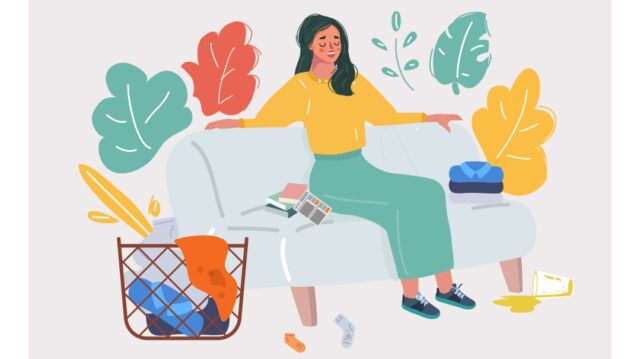
There’s been a lot of pressure lately to make every moment “meaningful”.
You’re meant to do yoga, bake your own sourdough, read five books a month, and drink water from a bottle that tells you you’re amazing.
And if you’re not doing that? Apparently, you’re wasting your time.
But here’s the thing: if watching two hours of old quiz shows makes your shoulders relax for the first time all week, then that’s self-care.
If playing a few low-stakes rounds in an online poker room gives you a little thrill without a hangover, that’s fair game.
If falling asleep to a podcast about haunted railway stations resets your brain, then job done.
The world’s demanding enough. We don’t need to add guilt about how we choose to relax.
There’s a quiet revolution happening in how we unwind – one built not on productivity, but permission. It’s not always visible. No one’s posting about it.
But it’s there in the soft click of a phone locking, the murmured “just one more episode,” the buzz of a spinning roulette wheel, or the oddly calming sound of someone slicing soap in a video you never meant to watch but now can’t stop.
We’re figuring it out, slowly. And maybe, just maybe, we’ll be gentler with ourselves in the process.