

Sound in interactive games serves two distinct purposes: creating atmosphere and providing feedback on user actions. Music can establish a particular theme, while a short audio cue can confirm a change in the interface’s state. In products intended for adults, audio effects should not be presented as indicators of future game outcomes. An analysis of sound design can focus entirely on music, interface functionality, and accessibility without making promises or claims about financial benefits.
Music as Part of Visual Identity
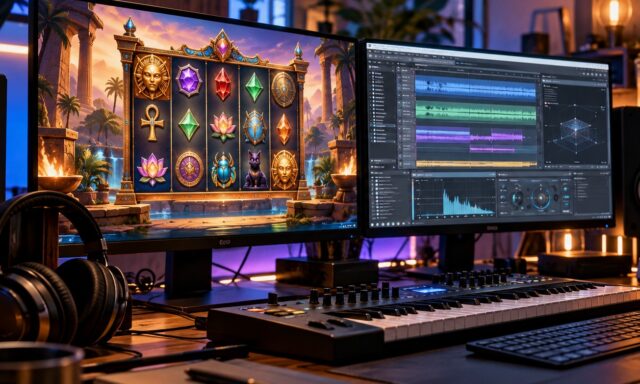
A soundtrack may incorporate electronic, orchestral, or ambient elements to complement a game’s visual design. The choice of instruments, rhythm, and dynamics serves an aesthetic purpose, much like music in films or interactive applications. However, this artistic role should not be confused with the product’s underlying mechanics. A memorable musical theme provides no information about how a game outcome is calculated.
An article about music can examine transitions between themes, background audio levels, and how sound adapts to the interface. These examples should be discussed descriptively, without offering recommendations on how to play. A game’s sonic identity has value as a design element, regardless of what happens during a gaming session.
Audio Cues That Confirm Actions
Audio feedback can indicate that a button has been pressed or that an animation has reached a particular stage. In a well-documented product, functional sounds are clearly distinguished from ambient music. If every effect has the same volume or intensity, audio messages can become difficult to interpret. The clarity of the audio mix is therefore directly related to the usability of the interface.
Within a category of free slot games, individual titles may feature different audio styles, but no sound effect constitutes a promise regarding the outcome of a random game. A description can explain the types of sounds used without suggesting that they provide clues about upcoming results. The term used in the category name serves to identify and explore content rather than indicate any financial advantage.
Balancing Background Music and Audio Feedback
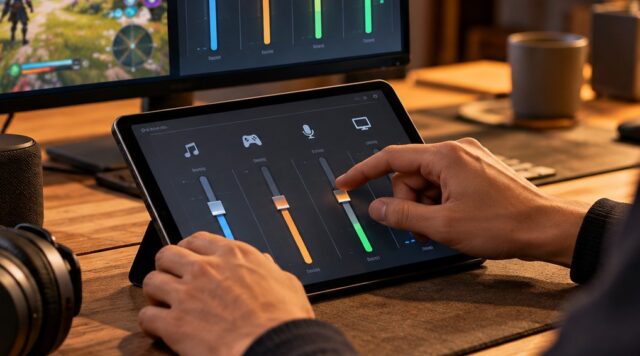
Interactive audio mixing must account for different devices. A sound that seems subtle through headphones may be perceived quite differently through a smartphone speaker. For this reason, designers should allow users to adjust music volume separately from certain sound effects or provide accessible configuration options. Audio adjustments should also leave the functionality of visual controls unaffected.
Sound effects accompanying animations can be synchronized to maintain consistency within a scene, but this synchronization does not change the random nature of the game’s mechanics. An article can describe the audio production process, file formats, or optimization requirements without presenting sound as an explanation of mathematical processes. Maintaining this distinction ensures the accuracy of the cultural and design analysis.
Volume Controls and Accessibility
Essential information should not be communicated through sound alone. A user may have audio disabled or may be accessing the service in an environment where listening is not possible. Visual messages, labels, and clearly defined interface states should make the interface understandable under these conditions as well. Volume control is a practical feature, not part of the game’s mechanics.
On mobile devices, switching between applications can interrupt audio playback, and the platform should handle playback resumption predictably. Sound that continues after a user leaves a page may cause confusion. The audio experience should respect system settings and the preferences of adult users while maintaining a clear separation between sound, navigation, and product documentation.
Why Sound Does Not Indicate the Outcome of a Round
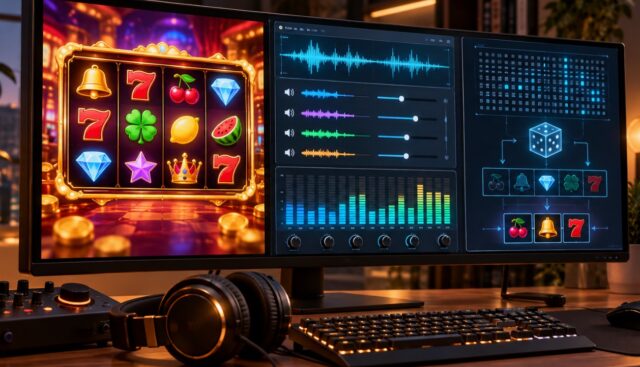
A musical composition can create tension, but suspense is an artistic technique. In games based on a random number generator (RNG), outcomes are determined by the technically defined game mechanics, while sound functions as a presentation layer. Interpreting a change in tempo or a particular sound effect as a clue about future outcomes would mean assigning the soundtrack a function it does not possess.
A catalog that features games that use different audio styles is available at https://million.ro/
From a musical analysis perspective, what matters is how each title distinguishes between ambient sound, functional audio cues, and volume control options. A soundtrack can establish a game’s aesthetic identity without altering its mechanics or indicating the outcome of a round.
Silence, Pacing, and Listener Fatigue
Good sound design is not only about what plays, but also about when nothing plays. Short pauses between audio cues give the listener time to register what has changed on screen, and they keep the overall soundscape from becoming tiring. A loop that repeats every thirty seconds may feel pleasant at first, yet over a longer session it can turn into background noise that users simply mute. For this reason, many composers write longer tracks with subtle variations, or build music from layers that can be added and removed depending on the state of the interface.
Listener fatigue is also linked to frequency balance. High-pitched effects cut through a mix easily, which makes them useful for confirmations, but too many of them can feel harsh, especially on small phone speakers. Softer tones and lower-frequency elements are often better suited to ambient layers that sit underneath the interface without competing for attention.
None of these choices affects how a game works. Pacing, silence, and frequency balance are tools for comfort and clarity, helping the audio support the visual design rather than overwhelm it. Designed with care, sound remains an optional, adjustable layer that users can enjoy or switch off entirely.
Audio Design as an Editorial Topic
Music, synchronization, and accessibility provide more than enough material for an article dedicated to interactive art. An analysis can explore the character of background music, the use of silence, or the consistency between audio and visual elements. Rankings and promises are unnecessary when describing the role of sound in a digital product.
For adult audiences, accuracy requires a clear distinction between atmosphere and game rules. Neither sound effects nor interface elements provide methods for controlling random outcomes. This distinction allows sound design to be discussed using appropriate terminology without confusing musical analysis with financial claims.